My special projects page 2
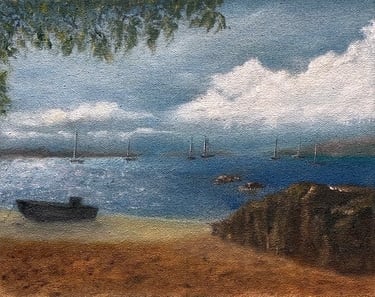
British Virgin Islands
Here We Come! Soggy Dollar Bar!
20.32 x 25.4 cm
Oil on Canvas
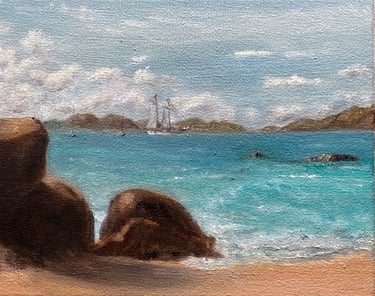
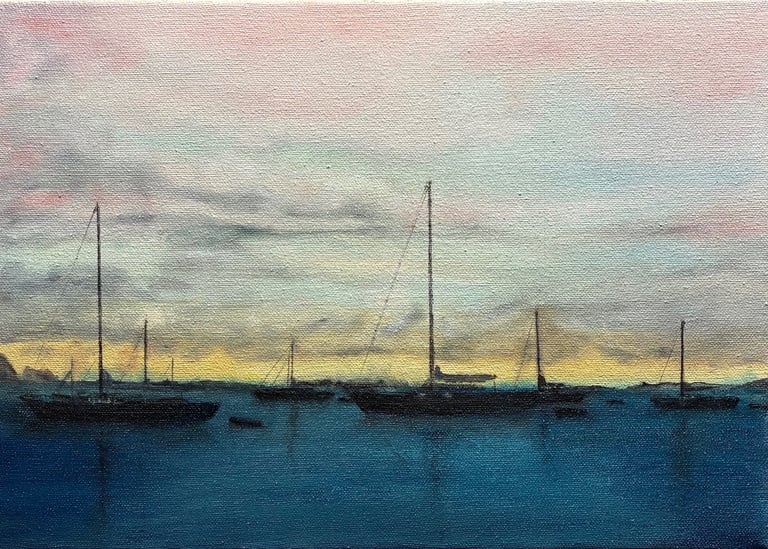
The Baths, B.V.I.
20.32 x 25.4 cm
Oil on Canvas
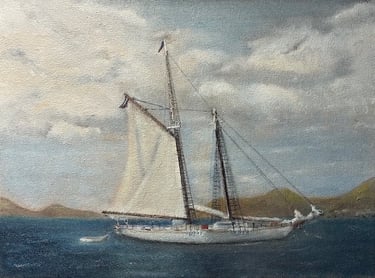
A Fine Schooner
22.86 x 30.48 cm
Oil on Canvas
Good Morning, B.V.I.
20.32 x 25.4 cm
Oil on Canvas
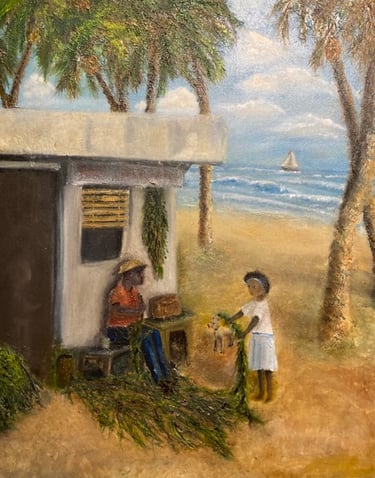
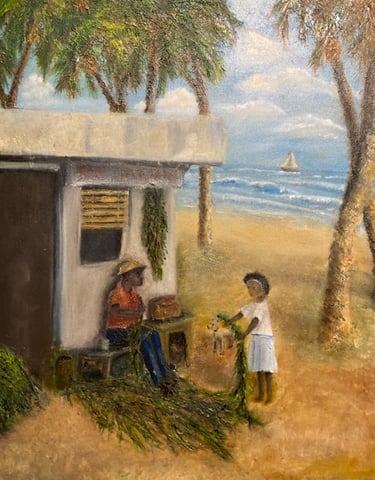
Salt Island - B.V.I.
While crewing on “Laughing Dolphin" in B.V.I. in the late ‘70s, we headed to Salt Island. I had the great pleasure to meet Clementine and Norwell. It was a wonderful visit with two gracious hosts.
While at one time there were a 100 residents, there are no longer any people living on Salt Island.
Two of the more recent residents were famous for passing along the histories and stories of Salt Island.
Clementine Helena Leonard Smith passed away in 1998. She maintained the beaches and salt ponds and received the British Empire Member Medal and the Frederick Pickering Memorial for her social and cultural contributions.
Norwell Durant greeted tourists until 2004. He would tell them about how salt used to be gathered during the spring when the two salt ponds would dry out leaving a layer of salt. After gathering salt, there would be a large party. Salt was an important commodity in the days before refrigerators. (There are also salt ponds on Anegada.)
Both Norwell and Clementine are buried on Salt Island.
Salt Island, B.V.I.
50.8 x 40.64 cm
Oil on Canvas
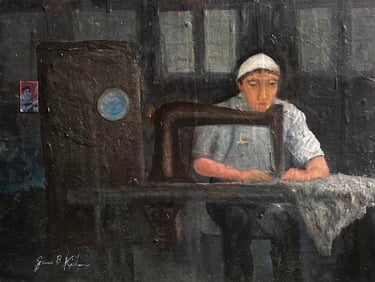
Garment Worker
Garment Worker
30.48 x 40.64 cm
Oil on Canvas
My painting of a garment worker stems from my grandmother being a seamstress for many years during the 30’s through the 60’s.
She lived in Camden and worked in Philadelphia. Garment work was once one of Philadelphia’s largest industries. Clothing and textiles (a category including hosiery, a Philadelphia specialty) employed more than forty percent of the city’s paid workforce by 1880. Starting in the first third of the nineteenth century, the garment industry became a center of labor activism, experiencing periodic strikes and union organizing drives until it began to decline in the mid-twentieth century.